
The Art of the Sketchbook: Why Your Ugliest Pages Matter Most
Do you have a beautiful, expensive sketchbook sitting on your shelf, pristine and untouched? You’re really not alone. Many artists suffer from what I call “blank page paralysis” – the fear of ruining a fresh book with a drawing that isn’t “good enough.” Here’s the truth that will set you free: Your sketchbook is not a portfolio. It is a playground.
The most valuable sketchbooks are often the messiest. They contain failed experiments, half-formed ideas, splatters, scribbles, and pages you’d never show anyone. And that is precisely where their power lies.
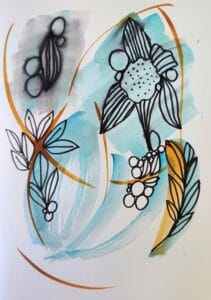
Why Your Sketchbook Should Be Ugly
A sketchbook only really has one job: to be a safe space for exploration. When you worry about every mark, you stop taking risks. You draw what you already know you can draw. Your work becomes stagnant.
But when you give yourself permission to be messy, something magical happens. You try new techniques without fear of failure. You combine colours you’d never commit to a canvas. You discover unexpected connections between ideas. The “ugly” pages are not failures; they are stepping stones to your best work.
Different Ways to Use Your Sketchbook
There is no single “right” way to keep a sketchbook. Experiment with these approaches:
- The Daily Visual Diary: Draw something from your day, every day. No pressure on quality. This builds a habit of looking and recording.
- The Idea Incubator: Use your sketchbook to develop concepts for larger works. Thumbnail compositions, test colour palettes, work through problems before you touch a canvas.
- The Material Playground: Try new tools and techniques without any goal. What happens if you use a credit card to apply paint? What does coffee staining look like on this paper? Document the results.
- The Travel Companion: A small sketchbook in your bag means you never miss an inspiring scene, shadow, or face. These on-the-spot drawings have an energy that studio work rarely captures.
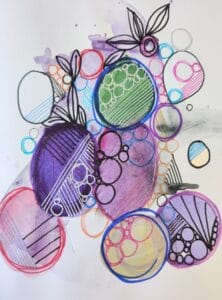
How to Start (Even If You’re Scared)
If the thought of “ruining” a beautiful book still holds you back, try this:
- Buy a Cheap Sketchbook First. Seriously. A spiral-bound pad from a supermarket removes the pressure. You won’t feel precious about it.
- Make the First Mark Deliberately “Bad”. Draw a wonky line. Scribble. Splatter some water. Break the spell of perfection on page one.
- Work from the Back. Some artists find it easier to start at the back, working forward. It feels less formal.
- Set a Timer. Give yourself ten minutes to fill a page with anything. The time limit stops you overthinking.
- Date Everything, Judge Nothing. Simply record the date on each page. This becomes a visual diary of your creative journey, complete with all its detours and discoveries.
- If you are still struggling, create work on separate pieces of paper and then stick them into your sketchbook. It is not ideal as you are actually creating a portfolio, but if you are really struggling, this approach might help you to get started.
Turning Sketchbook Work into Finished Pieces
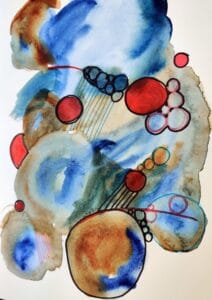
Here’s the secret that professional artists know; many of their best paintings started as a small, messy sketchbook page. Your sketchbook is your research and development department. When you review your pages periodically, you’ll spot themes, compositions, or colour combinations that deserve to be developed further. The ugly page becomes the blueprint for something beautiful.
A Final Word of Encouragement
Your sketchbook is for you and you alone. No one else needs to see it. The freedom of that privacy is where your real growth happens. So, close your eyes, open to a fresh page, and make the first mark – however imperfect. Your future self will thank you.
Internal Linking Prompts:
- Link to Blog 3: Making a Diary (bookbinding article) when discussing different types of sketchbooks.
- Link to Blog 51: Finding Your Visual Voice when discussing how sketchbook exploration leads to personal style.
NB I do not get paid to endorse any people or brands mentioned in my blogs. If you enjoyed this post, please like, share and follow me. Sharing, liking and following raises the algorithms in my favour.
Thank you for your support.