
A masterpiece painted on cheap paper is like a gourmet meal served on a paper plate: it won’t hold up. Here’s how to choose surfaces that protect your work for decades.
Canvas: Linen, Cotton, or Synthetic?
- Linen: The Ferrari of canvases – strong, archival, and pricey. Ideal for oils/acrylics. I would use this if being commissioned for a special piece.
- Cotton: Budget-friendly (8oz-12oz weights). Heavier means less sagging over time. I tend to use cotton but go for quality makers rather than cheaper brands, where the frames might warp or the canvas split. I always get canvases professionally made for commission pieces.
- Synthetics: New blends are promising but avoid them for heirloom pieces. Personally, I would stay away from these. Longevity is an issue I wouldn’t want to play around with.
Priming Tip: Always coat canvases with gesso (2+ layers) to prevent paint absorption and acid damage – see my earlier blog (No.7) on preparing your canvas.
 Paper: Skip the Cellulose
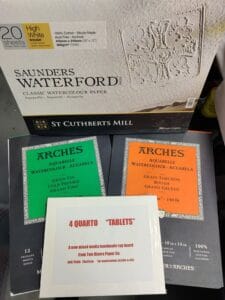 Paper: Skip the Cellulose
Newsprint and cheap watercolour paper are acidic and will self-destruct. For longevity:
- Watercolour: 100% cotton, acid-free (e.g., Arches, Saunders etc).
- Mixed Media: Look for “archival” labels and heavy weight (300gsm+).
Board: Seal It or Regret It
Even “artist-grade” boards can degrade. For best results:
- Use birch plywood (the least acidic).
- Seal pressed boards with acrylic medium or resin.
- For oils, stretch canvas over sealed board for extra stability.
Pro Warning: Sunlight and humidity are like kryptonite to art. Display your work away from windows and damp spaces.
NB I do not get paid to endorse any people or brands mentioned in my blogs.
If you enjoyed this post, please like, share and follow me. Sharing, liking and following raises the algorithms in my favour.
Thank you for your support.