
Collaborating with Other Artists: The How, Why, and When
There is a myth that art is a solitary pursuit – the lone artist, isolated in their studio, emerging only to unveil their finished masterpiece. While solitude certainly has its place, some of the most rewarding and growth-filled experiences in an artistic career come from collaboration.
Working with other artists can take many forms: joint exhibitions, studio swaps, creative partnerships on a single piece, or organising events together. When done well, collaboration multiplies your reach, refreshes your perspective, and builds lasting community. When done poorly, it can lead to frustration and conflict. Let me share what I’ve learned from running an exhibiting group and collaborating with fellow artists.
Why Collaborate?
- Shared Audiences: Each artist brings their own followers, collectors, and network. A joint exhibition or project exposes your work to new eyes.
- Shared Costs: Splitting the cost of a venue, marketing, or materials makes ambitious projects more affordable.
- Creative Cross-Pollination: Working with someone who uses different materials or approaches can spark new directions in your own practice.
- Emotional Support: The creative journey has highs and lows. Having peers who understand lightens the load.
Types of Artist Collaborations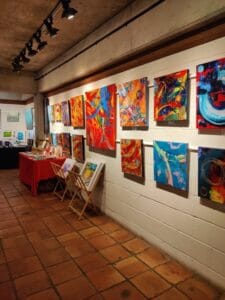
- Joint Exhibition
Two or more artists share a gallery space, either showing separate bodies of work around a theme or creating work in direct dialogue. This is often the easiest place to start. - Studio Swap
Exchange studio spaces for a set period. Working in a new environment – with different light, different energy – can break creative ruts and generate fresh ideas. - Collaborative Piece
Two artists work together on a single artwork. This requires clear communication and a willingness to let go of sole ownership of the vision. The results can be extraordinary. - Event or Workshop Co-Creation
Organise a workshop, open studio weekend, or art fair stand together. Shared workload makes these events more manageable and more fun. - Critique Partnership
Not a collaboration in the traditional sense, but a committed, regular exchange of feedback can function like one. Two artists committed to each other’s growth.
How to Find the Right Collaborator
Not every artist makes a good collaborator. Look for someone who:
- Shares Your Professionalism. Do they meet deadlines? Communicate clearly? Follow through on commitments?
- Respects Your Vision. Collaboration isn’t about one person dominating. You need someone who values your input as much as their own.
- Has Complementary (Not Identical) Skills. If you’re both strong at the same things, you may have gaps. Different skills make a stronger team.
- Is Someone You Genuinely Like. You’ll spend time together, problem-solve together, and possibly navigate stress together. Enjoy their company.
The Collaboration Agreement (Essential)
Before you start any joint project, have an honest conversation and put key agreements in writing – even if it’s just an email. Discuss:
- Roles and Responsibilities: Who does what? Who handles marketing? Who liaises with the venue?
- Costs and Expenses: How will you split them? What happens if someone drops out?
- Sales and Commission: For joint exhibitions, agree on pricing and how sales income is split.
- Credit and Promotion: How will you credit each other? Whose logo appears first?
- Exit Strategy: What happens if things go wrong? How do you dissolve the collaboration gracefully?
This may feel formal, but clear agreements prevent resentment and preserve friendships.
Navigating Challenges
Even with the best planning, collaborations can hit rough patches. Here is my hard-won advice from running an art group:
- Address Issues Early. If something is bothering you, speak up kindly and directly. Resentment grows in silence.
- Assume Good Intent. Most conflicts arise from miscommunication, not malice. Ask clarifying questions before assuming the worst.
- Know When to Walk Away. If a collaboration becomes consistently draining or one-sided, protect your energy. Not every partnership is meant to last.
A Final Thought
The best collaborations feel like a rising tide that lifts all boats. Your combined efforts create something neither of you could have achieved alone. Start small, choose your partners wisely, and celebrate the joy of making art in good company.
NB I do not get paid to endorse any people or brands mentioned in my blogs. If you enjoyed this post, please like, share and follow me. Sharing, liking and following raises the algorithms in my favour.
Thank you for your support.
You may find the following blogs give you additional useful information, in alignment with this topic.
Blog 39: Helping Out with an Art Group for your direct experience.
Blog 59: Networking for Introverted Artists for finding potential collaborators.