
From Studio to Storage: How to Safely Pack and Inventory Your Artwork
As your practice deepens and your body of work grows – fuelled by focused series and productive rituals – a practical, often overlooked challenge emerges: storage. A growing collection of artwork represents a significant investment of your time, materials, and creative spirit. Oh, and don’t forget money. Learning to properly pack, store, and inventory your pieces is not merely an administrative task; it is a fundamental professional skill. It protects your financial and emotional investment, ensures work is ready to exhibit or sell at a moment’s notice, and provides the profound peace of mind that comes from knowing your creations are safe and accounted for.
The fundamental principle of art storage is simple but absolute: never let two finished painted surfaces touch. Even thoroughly dry paint can undergo a process called “blocking” under pressure or in humid conditions, where the surfaces can soften slightly and bond together, causing irreversible damage. This applies to canvases, panels, and works on paper. Always separate finished fronts from anything that could adhere to them.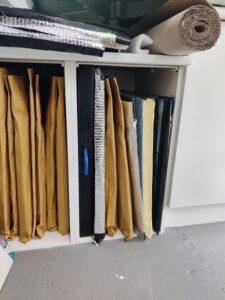
Let’s break down professional packing methods for different types of work, starting with unframed canvases and boards. The gold-standard material for protection is glassine paper. This acid-free, pH-neutral paper has a smooth, non-stick surface specifically designed not to adhere to paint layers. Gently wrap your painting in a sheet of glassine. Then, create a rigid sandwich by placing the wrapped piece between two sheets of corrugated cardboard or foam board cut slightly larger than the artwork. Secure the packet with artist’s tape around the edges, ensuring no tape touches the painting itself. These protected works should be stored vertically in a sturdy plan chest, on a specialised rack, or even in a well-constructed cardboard picture box, positioned like books on a shelf to prevent pressure on the surface.
For framed works or delicate works on paper under glass, you need to protect both the surface and the structure. Again, begin with a layer of glassine over the glass or the paper surface. Then, wrap the piece in a layer of bubble wrap, ensuring the bubbles face outward to prevent creating tiny circular impressions on the frame or paper over time. For framed pieces, cardboard corner protectors are an inexpensive and essential investment to guard against impact damage. Finally, seal the wrapped piece in a clear polypropylene sleeve or clean, unprinted paper, and label the outside clearly with the title and inventory number.
If professional materials like glassine feel out of reach, effective alternatives exist. Clean, unprinted newsprint or plain white tissue paper can serve as a short-term barrier against dust and light abrasion. Baking parchment is a really cost-effective solution, too. For separation and rigidity, inexpensive interlocking foam floor tiles or custom-cut cardboard corner pieces can work wonderfully. The core principles remain unchanged: protect the surface from contact, reinforce the vulnerable corners, and store in a cool, dry, dark place away from direct pressure.
While proper storage protects the actual work, a master inventory protects its identity and your professional record. An inventory is your art’s passport system; it prevents the nightmare of forgetting what you own, where it is, or what you sold it for. A simple digital spreadsheet is perfect. Key columns should include: a unique Inventory ID (e.g., AS-2024-001), Title, Dimensions, Medium, Date Finished, its current Status (In Studio / In Storage / On Loan / Sold), its Location (e.g., “Box 3, Shelf A” or “Client Name”), its Price/Insurance Value, and a Link to its high-quality digital photograph. The single most important habit is to update this document the moment a work is finished or changes location. This record is power – it is essential for insurance claims, professional gallery submissions, estate planning, and simply knowing the scope and value of your own creative output.
Taking a dedicated morning or afternoon to properly pack and log your existing work is an act of profound respect for your own labour and vision. It transforms a precarious pile of canvases in the corner into a managed, professional collection. This organised system means that when opportunity knocks – a last-minute call for a submission, a client request to see available work – you can respond with confidence and grace, knowing exactly what you have and that it is preserved in perfect condition, ready for its next chapter.
NB I do not get paid to endorse any people or brands mentioned in my blogs. If you enjoyed this post, please like, share and follow me. Sharing, liking and following raises the algorithms in my favour.
Thank you for your support.