
Sustainable Artistry: Eco-Friendly Practices for Your Studio
In our creative pursuits, it’s all too easy to get lost in the flow of making art and to overlook the trail we leave behind: empty plastic tubes, solvent jars, and offcuts headed for the bin. The traditional artist’s studio can quietly generate a surprising amount of waste. Yet, embracing a more sustainable practice isn’t about harsh restrictions or diminishing your creative fire. Instead, it’s an invitation to adopt a more mindful, intentional, and often more inventive way of working. By making conscious choices, we can honour both our art and the environment that fuels our inspiration.
Adopting a sustainable mindset goes beyond environmental ethics; it actively benefits your art. When you view materials as precious, you use them with greater care and creativity. This mindset encourages problem-solving and innovation, often leading to unique textures and approaches that become part of your signature. It can simplify your process, reduce exposure to harsh chemicals, and even become a compelling part of your artistic narrative – a value that galleries and ethically-minded collectors are increasingly seeking.
Transforming your studio starts with practical, manageable steps. Let’s begin with your substrates.
Before purchasing new canvases or boards, look at what you already have. An unsuccessful painting isn’t a failure; it’s a free, primed surface. Sand it down and apply a fresh layer of gesso. Seek out local suppliers of sustainable materials, such as boards made from recycled wood pulp or paper with high post-consumer content. This not only reduces waste but can connect your work to your local landscape in a new way.
Next come your choice and use of paints.
Investing in higher-quality, pigment-rich paints is a sustainable act in itself. They offer superior coverage and light fastness, meaning you use less paint over time and your work lasts longer. For acrylic painters, a stay-wet palette is a game-changer, preventing paint from drying out overnight. For oil painters, consider exploring water-mixable oils to eliminate the need for volatile, solvent-based mediums and cleaners.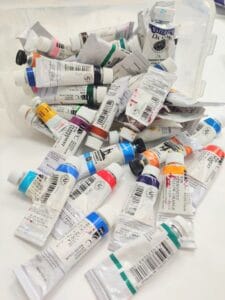
Cultivate the habit of squeezing out modest amounts of paint; you can always add more. Here’s a top tip: wrap up oil paints on the palette using cling film/surround wrap and put it in the freezer. You will need to give it half an hour to defrost when you want to use it, but it keeps really well.
The lifecycle of your tools is another key area. Proper brush care extends their life for years. Clean them thoroughly after use with the appropriate cleaner. For other tools, embrace creative reuse: old jam jars become perfect brush holders or medium containers, clean cardboard can be used as disposable palette paper or for test surfaces, and rags can be washed and reused. When materials finally reach the end of their life, research responsible disposal. Some councils recycle metal paint tubes, and certain art shops have take-back schemes for plastic containers.
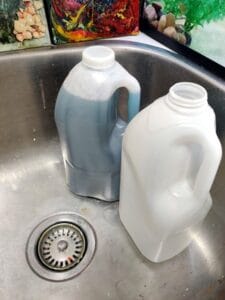
Finally, the responsible disposal of waste is non-negotiable for a safe studio. Never pour solvents, acrylic medium residues, or paint sludge down the sink. For solvent-based waste, use a two-jar system: let the dirty brush cleaner sit in a sealed jar until the pigment settles to the bottom. Carefully pour the now-clear solvent back into your working jar for reuse. The sludge at the bottom can be left to evaporate fully in a well-ventilated area, and the solid residue disposed of with hazardous waste. For water-based waste, let the water evaporate from a container outdoors and place the dried paint film in the general rubbish. Where I live, we are not on mains sewage and therefore have to be super careful about what goes down the sink. All my wastewater is collected in old screw topped milk cartons and put out with household waste.
View these practices not as limitations, but as a new set of creative parameters. What fascinating textures emerge from a heavily reworked canvas? What harmonious colour relationships can you discover by limiting your palette to a few, carefully chosen, non-toxic hues? A sustainable practice fosters a deeper, more respectful dialogue with your materials, transforming you from a consumer into a conscious collaborator with your medium.
Start with one change this month – perhaps committing to revive one old canvas or finally setting up that stay-wet palette. Each considered choice is a deliberate brushstroke towards a studio that nurtures your art and preserves the world that inspires it.
NB I do not get paid to endorse any people or brands mentioned in my blogs. If you enjoyed this post, please like, share and follow me. Sharing, liking and following raises the algorithms in my favour.
Thank you for your support.